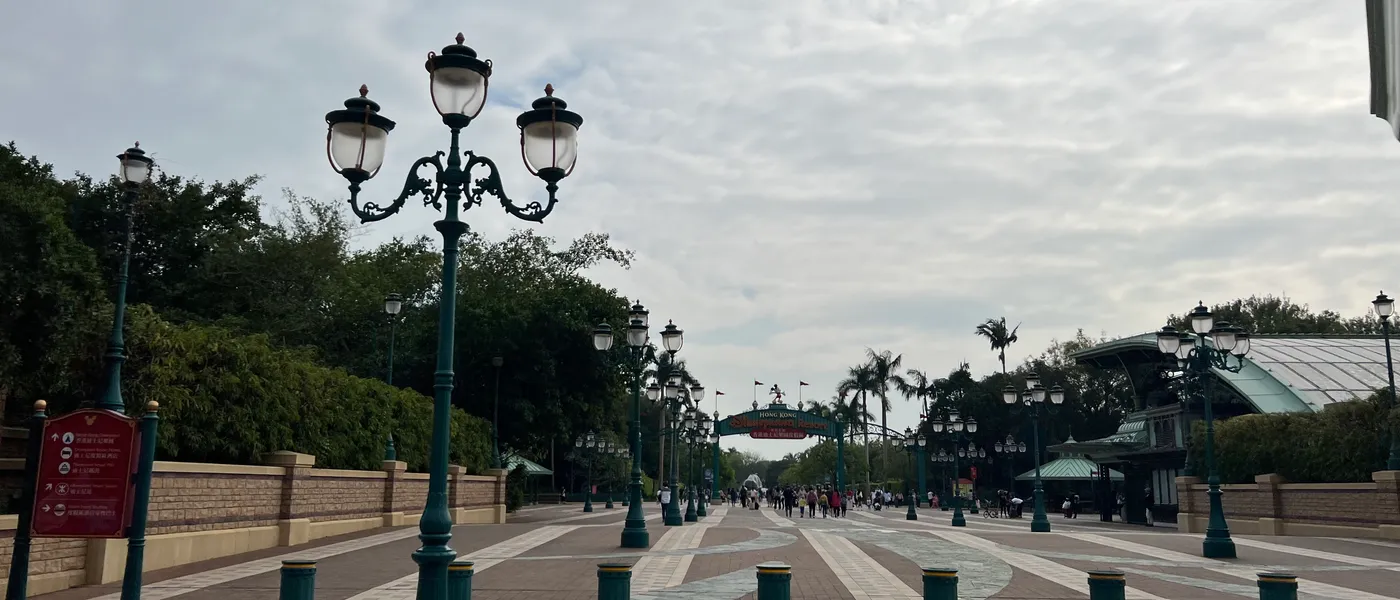
- Loudest park
- Universal Studios Japan
- Calmest park
- Hong Kong Disneyland
- Tokyo Disney Resort scheme
- Disability Access Service (DAS)
- USJ scheme
- Guest Support Pass
Every one of these four parks has been written about extensively. Almost none of that writing is honest about sensory load, and what exists treats it as a family-with-young-children topic exclusively — nappy-change stations and stroller parking, not pacing for an adult who finds crowds, noise, or long stimulating queues genuinely draining. That’s a real gap, not a minor one, and it’s the one piece on this site I’d point to first if you’re trying to work out whether any of these trips are actually plannable around your own limits. Short answer: yes, all four are, once you know what you’re actually walking into.
From loudest to calmest
Universal Studios Japan is the loudest of the four, start to finish — dense, high-energy, and built around big, immersive IP lands that don’t let up much between attractions. It rewards early starts and a tight plan more than any of the others, partly because there’s less natural downtime built into the park itself.
Tokyo Disneyland runs busy and stimulating across a full day, closer to USJ than to its sister park, though with more of the classic-Disney pacing (parades, castle shows) that comes with its own crowd-and-noise profile rather than ride-queue intensity specifically.
Tokyo DisneySea is intense at its peaks — the crowds around Fantasy Springs in particular — but genuinely rich in calm, beautiful, low-stimulation spaces between the headline attractions in a way the other three aren’t. It’s not a uniformly loud park; it’s a park with real highs and real quiet, and knowing that in advance changes how you’d plan around it.
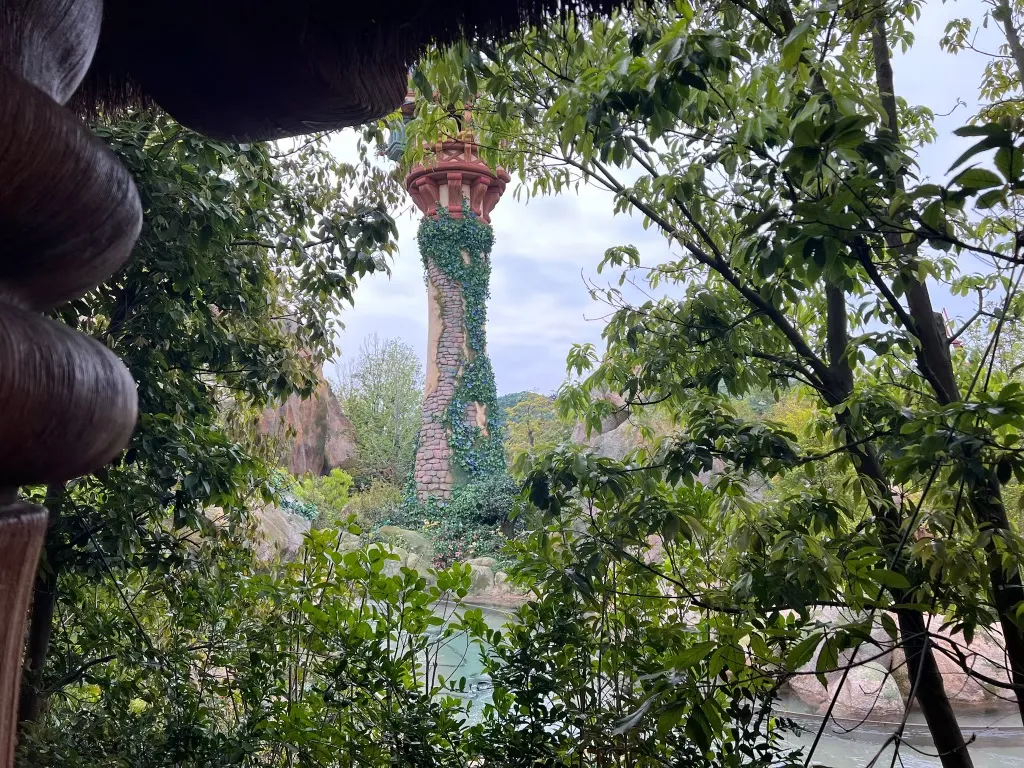
Hong Kong Disneyland is the calmest by a real margin — thin lands, short queues, no rope-drop discipline required, and genuinely the natural low-stimulation choice among the four if crowd tolerance is doing a lot of the work in your decision.
What each park actually calls its access service
Every one of these schemes gets misnamed or vaguely described online more often than not, so here they are properly, with the honest caveat that eligibility and documentation requirements are the kind of thing that changes without much notice — confirm directly with each park before you travel, not from this page alone.
Tokyo Disney Resort runs a Disability Access Service (DAS). You register in person — at your first attraction, not in advance online — by presenting a disability certificate (an original, not a copy or scan, or the digital disability handbook app) alongside your party’s tickets. A Cast Member records the information and sets a return time on your ticket, comparable to the current queue wait, so you wait away from the line rather than in it; your whole party (up to six at most attractions, up to ten for character greetings) can wait together. A related Separate Wait Service covers temporary conditions — a broken leg, pregnancy, and similar — on the same basic model. What exactly counts as acceptable documentation for an overseas visitor isn’t fully spelled out on the official pages, so if you’re travelling from the UK, it’s worth contacting Tokyo Disney Resort’s disability services line in advance (+81 47-305-3020) to confirm what you should bring, rather than finding out at the gate.
Universal Studios Japan runs a Guest Support Pass. You register at Guest Services on arrival, and for overseas visitors the most commonly accepted document is a doctor’s letter — on official letterhead, naming the person it applies to, and stating why standing in a conventional queue isn’t possible. Bring the most official supporting documentation you have; approval isn’t automatic, and it’s sensible to have more than one form of paperwork rather than relying on a single letter.
Hong Kong Disneyland also runs a Disability Access Service (DAS), arranged through Guest Relations, again on a return-time model rather than immediate access — you’re allocated a time roughly matching the standby wait and come back rather than queuing. Worth knowing specifically: if your only access need is mobility-related — using a wheelchair or scooter — HKDL’s guidance is that you don’t need DAS at all, and a different, more straightforward accommodation covers that instead.
Return-time, not immediate access, is the model almost everywhere
It’s worth naming the shared mechanic across all three, because it’s the part most first-timers get wrong: none of these schemes let you walk straight onto a ride. They let you wait somewhere that isn’t a themed, enclosed, moving line — which matters a lot if noise, close crowding, or long unbroken stimulation is the actual problem rather than standing still — and come back at an assigned time. It’s a genuinely useful tool for that specific kind of day. It isn’t a fast pass, and treating it like one is the most common way people end up disappointed by it.
The strategies that work regardless of eligibility
Not everyone who’d benefit from pacing a day differently qualifies for, wants, or needs to register for an official scheme, and most of what actually helps doesn’t require one. Early mornings are the single best lever: the pre-opening hour at Tokyo Disney has a reputation for pressure, but it’s also genuinely the calmest part of the day — quiet, orderly, nobody pushing. If early starts suit you better anyway, that’s not just the tactically smart window, it’s the gentle one too.
Know what you’re walking into before you commit to it: Fantasy Springs’ queues are themed, enclosed, and long by design, in Standby Pass or Premier Access alike — worth knowing in advance if enclosed, dimly-lit, slow-moving spaces aren’t for you, and worth knowing that the theming genuinely is part of the experience if they are. At Universal Studios Japan specifically, my advice is to invest in more time rather than more intensity — two slower days beat one that tries to do everything, and accepting a strict priority list over a completionist one is a legitimate way to do the park rather than a compromise.
And if your ceiling is genuinely lower across the board, that’s a real, valid input into which of the four parks you start with — not just how you plan once you’ve already booked.
Confirm the details, every time
Everything above is accurate as researched and corroborated at the time of writing, not lifted from a single source, but every one of these three parks has changed its access schemes before and will again. If you’re relying on any of this to plan a trip, check the current details on each park’s official accessibility pages, or contact them directly, close to your travel dates rather than months out. None of it is medical advice, and none of it is a substitute for confirming your own specific situation with the park itself — it’s a starting point for a conversation you’re better placed to have once you know what to actually ask.